Writing a novel: False Starts and Second Chances

To be or Not to Be?

Positive, I mean…..

My little old book is almost ready to be frisbeed out into the world of literary agents again.

So when you’re submitting, what sort of mental attitude should you have?

I’m writing a feature on the forthcoming Rio Olympics at the moment, and researching past and possible medallists. I could take the Usain Bolt stance. I’m going to win, no doubt. Or I could be more of an Adam Peaty. ‘It’s not yours until it’s physically around your neck.’ (Hmm, that probably works better with medals than books, although……..)

book necklace


Away from the sporting arena, I could go Victor Meldrew. Yesterday, a photographer pal of mine told me: ‘This may sound a bit negative, but I think you should expect the worst.’

Say, what?!

(Note to reader – he hasn’t read the book). ‘Erm, I just mean you should think negatively and then you won’t expect anything.’

Maybe I should adopt this approach.

But just now an email popped into my inbox.

‘I’ve finished reading your book and I have to say it’s looking absolutely brilliant.’ That’s my editor, Sara Sarre.

So, I’m about to walk up to the starting blocks yet again. Prayer position, and breathe….. and back to that feature…..

(Header image unsplash.com patricktomasso.com)

Should you base your characters on real-life people?

‘If they’re based on somebody else, in a funny way it’s an infringement of a copyright. That person owns his life, has a patent on it. It shouldn’t be available for fiction,’ said author Toni Morrison in a recent interview with The Paris Review.

Which got me thinking, do I ever copy from life?

I use aspects of things – situations, people’s personality quirks, the way they look. I apply a heavy dose of imagination then write.

To put it the Maggie O’Farrell way: ‘I think all fiction is a patchwork of things you borrow, things you lift from real life and others you simply make up.’

To copy directly would be plagiarism, right? And a tad risky. I mean look what happened to novelist Gregoire Delacourt when a court ordered him to pay actress Scarlett Johansson 2,500 euros for his ‘demeaning’ depiction of a female lookalike in his book The First Thing We Look At.

And although few of these cases get as far as court, writing is a risk. Ablene Cooper, a housekeeper for the family of the brother of The Help author Kathryn Stockett filed a suit. Cooper claimed that her image and likeness had been used without permission for one of the main characters, Abileen Clark. The case was dismissed because the one-year statute of limitations had elapsed.

If my book ever makes it into print, I wonder who’ll be looking for themselves in the margins. My mum is convinced I’ve used her personality for my central character. ‘I haven’t,’ I said. ‘Ya wee devil,’ she replied. I might add that not once does my main woman say ya wee devil. Hailing as she does from the Philippines, it’d be completely out of character. She does however give everyone nicknames (like my mum). A work colleague of my mum’s whose wayward hair failed to stay in a daily chignon became Bird’s Nest. A neighbour became Margaret with the Dug, to distinguish her from the five other Margarets living on the street. Probably best not to mention The Space Cadet or Whhhhhhhy Me????? at this juncture, but the point is, my mum can see herself in my main character.

Some of the people who’ve read earlier versions of the book, reckon my other main character, Juliet, is me. But a couple of months ago, a literary agent, who was admittedly giving me positive feedback at the time, confessed, ‘Juliet’s too wet for me to really care about her.’ Ouch. Out came the drying-up cloth, and in went optimism and some classic lines delivered by one of my best friends. (She’s bound to recognise them). For the record though, Juliet isn’t my friend, neither is she me. I haven’t ever given anyone mouth to mouth resuscitation like Juliet although I did practise on a plastic model when St John Ambulance came to our school once. There was dribble involved.

The few times I’ve tried to write a character based entirely on a person I’ve known, it simply hasn’t worked. Writing like this is a dead end (for me). Copying people is like trying to copy another writer’s style – it just leads to bad writing – oh, and lawsuits.

So best stick to the tried and tested method. Let real events and people send your imagination into a spin, then invention will do the rest of work.

How NOT to write a synopsis

Writing a synopsis is variously described as ‘synopsis hell’ and ‘the most difficult 500 words you’ll ever write’ – in my case, the most difficult 800.

I’ve just written a new synopsis for my first novel, so thought I’d share my pain, ahem, I mean pointers.

Is a synopsis going to land you an literary agent?

Most submissions require a covering letter, the first three chapters of your book and a synopsis. An agent will read your covering letter, take a look at the first few pages of your novel and if they like what they see, they’ll want to know where the story is going; does it have enough meat on it; will it sell? Move over chapters; make way for the synopsis.

What is a synopsis?

It’s not the blurb on the back of the book; it’s the nuts and bolts of your story. What happens; what’s at stake and how does the jeopardy rise? Is the ending a satisfying one?

Here are some other essential ingredients:

  • Hit the highlights – the bones of the story – beginning, middle and end.
  • Make sure the plot has a true arc – are the conflicts of the main characters clear, and the resolutions to those conflicts?
  • Mention the genre of your book – commercial, YA, book group fiction etc.
  • Include setting – what country, what year?
  • Highlight the main characters. Put their names in capital letters or embolden them when you first introduce them.
  • Include the unique selling point of your book.
  • Make the synopsis 500 to 800 words, and when you get an agent who wants a synopsis of 300 words instead, put your head into your hands and blub loudly. Then dab yourself down. You can do this! Chop, chop – take out another subplot or two and get rid of superfluous spiel.
  • Spoilers – Do include the final plot twist.

What shouldn’t you include?

  • A detailed account of the characters’ personalities. A quick character sketch is enough. Disillusioned science teacher Walter White. The unmarried Frances with an interesting past etc.
  • A blow-by-blow account of every single subplot. Be lean; you don’t have the space for this.

Finally, let other people read your synopsis because if Great Aunt Iris can’t make sense of it, you can bet your life a literary agent will chuck it into the bin faster than you can say Trash.

What it’s like to finish writing a novel

It’s almost time to send my first novel out into the world again. There’s nothing left to write on its pages.

There was the first draft. Then a literary agent met me and suggested changes. Next, came the second draft.

When the rejection came, I pushed the book into a drawer for a few months. Then somehow the book started niggling at me again. I found the will to push on with the third draft.

Another literary agent liked it, and what happened was this: a major rewrite and a new plot, resulting in draft number four. Cue good reactions from several literary agents, but still an all-round no.

Then one of the agents wrote back to me recommending an editor/mentor, and with her insights I’ve now completed the fifth draft. Let’s hope this draft is fabulous number five.

When Hannah Kent finished Burial Rites, she had a surprising reaction. (Admittedly this was her first draft, not her fifth).

‘I realised I no longer knew what to write. There was nothing more to write. I pushed my keyboard away from me, read the last line over and over, and then – unexpectedly – burst into tears. They weren’t tears of elation or disbelief. I was suddenly, profoundly sad.’

I can relate. Finishing feels like a loss. I’m glad that I’ve got this far, but all those obsessive late nights, all those burnt pieces of toast, all those half-listened to conversations, are gone.

I’m not sad. Neither am I elated; I just feel knackered. I’ve read my book that many times aloud that I sound like I have a forty-a-day habit. During warmer months, me speaking in my characters’ tongues has spilled through the open windows. ‘I don’t want this anymore.’ ‘It isn’t a marriage anyway!’ The neighbours must think I’ve got multiple personalities. Either that or I need a bit of marriage guidance counselling.

And I have to admit, I do feel slightly unhinged. A chapter of my life is now over. This book is just about as good as it ever will be; it’s do or die.

I’m stepping into some new place, some other writing project, something that might give me yet more oxygen. Because writing is like breathing to me: it’s the only way to live.

Do you finish books you hate?

When I read, I want a story to open up a space in my chest for someone to dance in. I want intensity. I want to feel, to believe. Evie Wyld’s All the Birds, Singing and Khaled Hosseini’s A Thousand Splendid Suns both did the job.

But sometimes a book doesn’t slice my loaf – there are seven of those piled up beside my bed with an empty mug perched on top like an amateur art installation. ‘I’ll come back to you,’ I think. (I lie.)

It’s not like any of those books are rubbish, they’re just not doing it for me.

A couple of weeks ago, an editor asked me: ‘Do you read as reader or as a writer?’

And something has switched over the past year because I now read as a writer. I take notes, and analyse clues and complicated plots.

That’s turned me into even more of a quitter of books I don’t really like. I want to be inspired after all. Reading has become study. Rather than watching a magician do tricks, I’m leaning over to the side, having a good old nosey at where she’s stuffed her ace of clubs.

But I could learn something from my bedside pile. Just what is it that’s not working for me? Is the main character too much of a snooty toff to identify with? Or is it that the plot is too slow, the characters too passive?

Pressing on with a book that makes you groan for all the wrong reasons can pay dividends. I gave up with We Need to Talk About Kevin 100 pages in, but I returned to it a year later, and what a punch-to-the-gut read it was. Similarly, I toiled over the opening chapters of The Narrow Road to the Deep North, but stuck with Dorrigo Evans to the bitter, beautiful end.

I had to exercise patience with both books, and boy was it worth it. I felt, I believed. Someone salsa-ed inside my ribcage.

So – oh go on then – I’m going back to my bedside pile.

What kind of reader are you – a quitter or a plough-on-until-the-ender?

How to start writing a novel

Do you plot or free-flow?

Some writers start off with a massive sheet of paper, scribbled with charts and graphs.  They jot down just what’s going to happen from the very first page to the turning point, right through to the climax and beyond.

If that sounds like you, you might be writing a plot-driven novel. And I envy you – your destination might be miles away, but you can see it there like a landmark in the tiny distance.

If you just scribble down rough ideas for characters that’ll leap into the murky situations you create for them, you might just find yourself in the territory of the character-led novel.

‘You have a character-driven novel,’ an editor recently told me. ‘So the plot depends on how each character evolves.’

When I started writing The Maid’s Room, I had three characters in mind. I jotted down a couple of key events, read a few text books about how to write a novel then blundered my way through. Even though the book got placed in a competition, that first draft was pretty amateurish. There were enough self-conscious phrases to leave you moaning in pain.

But I wasn’t giving up on it – I knew I had strong characters, so I tinkered, and edited, titivated and rewrote. Then finally a renowned literary agent gave me a good talking to. She loved so much about the book, but the plot was just so flipping depressing. Well, it certainly wasn’t going anywhere the way it was, so I decided to rewrite it.

That’s when I went down the graphs route. My friend, Lucy, thought she was taking me out for a birthday lunch. Instead, I unravelled my A3 sheet of paper complete with columns and arrows, capital letters and conclusions. Lucy managed to look interested. The characters would remain the same, the setting too, but there was a new plot for them all to fall into.

I started writing, knowing what was going to happen, and it did. It was just the characters got a bit distracted along the way. Next, another agent referred me to an editor who’s now keeping me on the straight and narrow.

So I started off a free-flower and have ended up a plotter.

With book two, I think I’d feel safer having a plan, but until you get to know your characters, how can you work out what they’re going to do? Which means I’ll probably head down the same route – create characters, put them into awkward situations then see how they react.

This piece was inspired by a post by author Claire Fuller.

A Writer’s Day on a Plate

NOT SO EASY EATS

TOAST

Stick the bread in the toaster. It’ll take at least a minute, so you might as well use the time wisely, right? Smash the keys and peer at the screen. And then smell the stench of burn. But what’s a charred piece of Kingsmill when you’ve cracked another line? Frisbee the blackened square into the bin and pop another slice in.

Now, you’ve figured out the timing, it’ll be browned to perfection. Carry on typing. The fire alarm goes off next, so you fan that new notebook under it, and figure it’s best to concentrate on one thing at a time.

IMG_9290

SNACKS

The end of a paragraph? You’ve hit 500 words? Any excuse to celebrate – cut a slice of cake, butter that muffin. You deserve it right?

And might as well kill two birds with one stone. Scoff it in front of your keyboard and type. Only thing is the space bar’s now jammed with crumbs, so tip your laptop upside down and give it a good old shake. Nope, it’s still not working. Time to bring out the big guns. You wet a J-cloth and give the entire keypad a once over. The screen’s flashing, the mouse is dashing around like a frenzied fly.

Call it quits for the day and visit your nearest Apple store.

QUICK AS YOU LIKE DINNER

What a palaver dinner is. The most time-consuming meal of them all.  You take everything out on the food, cutting those carrots like you hate them. Flinging the rice into the pan to bring to the boil. And as for any protein…..oh, just stick it under the grill. All this preparation means you’re going to have to leave your computer alone. Except you don’t.

You end up with the rice grouted to the pan and the carrots boiled to buggery. Looks like you’ll have to make do with toast only there isn’t any bread left since you burnt it all.

There’s always the freezer. So that’s where that garlic naan that you froze in 2009 went to.

Still if your cupboard is bare, it gives you more time for writing.

How to Stay Sane When Submitting Your Novel

How NOT to lose the plot when submitting your book

Recently literary agent Juliet Mushens suggested in a Tweet that it’s a good idea to submit to eight to ten agents at a time rather than blanket submitting. Brilliant advice, I reckon. If your book’s got some kind of magic to it, you might just get some agent feedback. Even if the book gets rejected, you could still come away more clued-up about what’s not right with it, bruised ego aside. You might then choose to rework it before submitting to other agents.

A few months ago, I got a request for the full manuscript of my second book. Ultimately the agent turned it down saying she didn’t find the characters likeable enough and she wasn’t sure what was driving the story. I’ve stopped sending it out and am halfway through a rewrite. I think the characters are more sympathetic now, with meatier back stories; I might just have a better book on my hands.


IMG_2686

That brings me back to my first book. I had some encouraging agent interest in it two months ago and ended up rewriting it. The book is stronger now and I’ve sent the first three chapters to several agents. So here’s how to hold onto your sanity while waiting for a reply.

1. Don’t refresh your email account every five minutes.

Turn it off. Turn off social media too. Do not allow yourself to look at the Twitter accounts of the eight agents on your list. God, she’s reading Goddamn Marlon James when she should be reading my MS…. Look away. Log off. Go and do something less boring instead.

2. Don’t be tempted to send out to more than ten agents at a time.

Remember, you might just learn something. So you’ve written the whole thing in patois and the agent who loved your concept absolutely hated the Gads instead of Gods, the me sandals instead of my sandals. Okay, admittedly there might be those of you who love that kind of thang (sic), but if more than one agent says it doesn’t work, it could be time to take notice. If after the first few submissions, you learn two things about how to improve your book, you’ll be well pleased you didn’t do multiple submissions.

3. Do not delete the rejection emails.

Your lips may bulge with that silent F, so let them, but do not let your fingers smash that delete box. It’s very useful to keep a log of who’s rejected you. That doesn’t mean you can’t contact them again when the book is better, or when you’ve penned your second masterpiece. And just because you’ve got a rejection from one person at a big agency doesn’t mean to say someone else at that agency won’t fall in love with your writing. Also, think about how much fun it’s going to be counting up all those rejection letters when you’re finally published. Yeah, put that in your pipe and smoke it, Mrs/Mr ‘I’m going to pass….’

4. When an agent asks to see the full manuscript, don’t stand in front of the mirror practising what you’re going to say if she/he offers you representation.

‘I’d just like to thank my husband for his attention to apostrophes, my friend Jill who was there from the start….’ Waste of time! Chances are you might have a long wait for representation, so instead of risking your family banging on the bathroom door – ‘Is everything alright in there?’ – just get back to writing, or reading, or thinking up new ideas. Preferably all three.

5. Do not put your writing on hold.

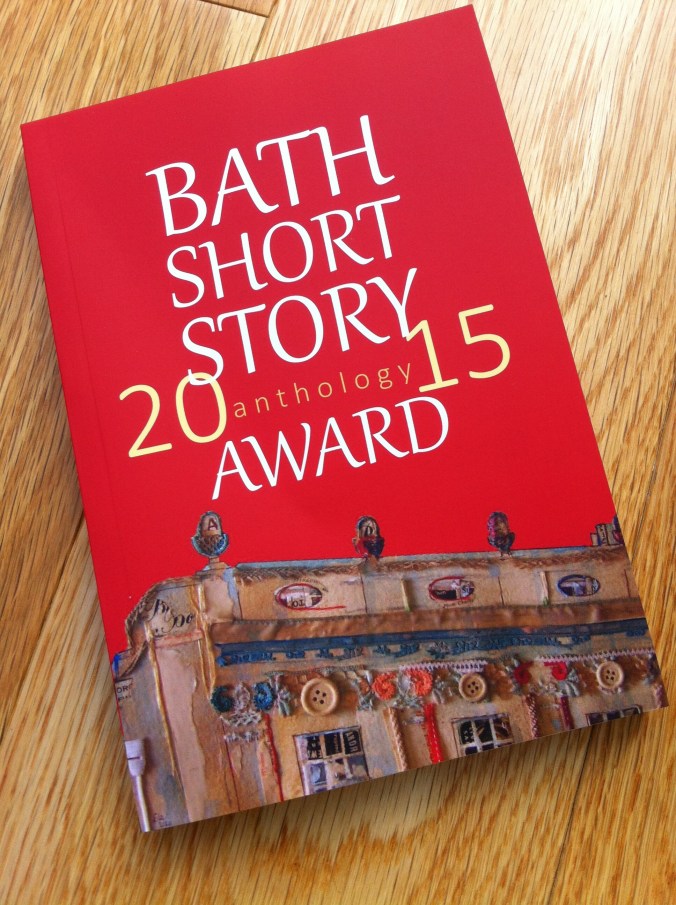
If anything write more. Discarding all of the above, this is one thing I have managed to do. I’ve always got a short story on the go. Just write something, anything, write rubbish then rework it, edit it, perfect it. For me, short stories silence the self-doubt. I love them. They’re a rejection letter quick fix. So keeeeeeep writing!
bath anthology

6. Do not burn your book.

So you’ve now got 30 rejections in the bag, but don’t start carping. ‘That’s it, I’m finished.’ Last year an agent who I met at a literary event talked about how a novelist’s first novel often becomes her second or third published novel. And since I know a couple of best-selling authors, I can vouch for that. Keep searching for ideas, maybe even start book two. Keep trying. Things can only get better, right?