How to Stay Sane When Submitting Your Novel

How NOT to lose the plot when submitting your book

Recently literary agent Juliet Mushens suggested in a Tweet that it’s a good idea to submit to eight to ten agents at a time rather than blanket submitting. Brilliant advice, I reckon. If your book’s got some kind of magic to it, you might just get some agent feedback. Even if the book gets rejected, you could still come away more clued-up about what’s not right with it, bruised ego aside. You might then choose to rework it before submitting to other agents.

A few months ago, I got a request for the full manuscript of my second book. Ultimately the agent turned it down saying she didn’t find the characters likeable enough and she wasn’t sure what was driving the story. I’ve stopped sending it out and am halfway through a rewrite. I think the characters are more sympathetic now, with meatier back stories; I might just have a better book on my hands.


IMG_2686

That brings me back to my first book. I had some encouraging agent interest in it two months ago and ended up rewriting it. The book is stronger now and I’ve sent the first three chapters to several agents. So here’s how to hold onto your sanity while waiting for a reply.

1. Don’t refresh your email account every five minutes.

Turn it off. Turn off social media too. Do not allow yourself to look at the Twitter accounts of the eight agents on your list. God, she’s reading Goddamn Marlon James when she should be reading my MS…. Look away. Log off. Go and do something less boring instead.

2. Don’t be tempted to send out to more than ten agents at a time.

Remember, you might just learn something. So you’ve written the whole thing in patois and the agent who loved your concept absolutely hated the Gads instead of Gods, the me sandals instead of my sandals. Okay, admittedly there might be those of you who love that kind of thang (sic), but if more than one agent says it doesn’t work, it could be time to take notice. If after the first few submissions, you learn two things about how to improve your book, you’ll be well pleased you didn’t do multiple submissions.

3. Do not delete the rejection emails.

Your lips may bulge with that silent F, so let them, but do not let your fingers smash that delete box. It’s very useful to keep a log of who’s rejected you. That doesn’t mean you can’t contact them again when the book is better, or when you’ve penned your second masterpiece. And just because you’ve got a rejection from one person at a big agency doesn’t mean to say someone else at that agency won’t fall in love with your writing. Also, think about how much fun it’s going to be counting up all those rejection letters when you’re finally published. Yeah, put that in your pipe and smoke it, Mrs/Mr ‘I’m going to pass….’

4. When an agent asks to see the full manuscript, don’t stand in front of the mirror practising what you’re going to say if she/he offers you representation.

‘I’d just like to thank my husband for his attention to apostrophes, my friend Jill who was there from the start….’ Waste of time! Chances are you might have a long wait for representation, so instead of risking your family banging on the bathroom door – ‘Is everything alright in there?’ – just get back to writing, or reading, or thinking up new ideas. Preferably all three.

5. Do not put your writing on hold.

If anything write more. Discarding all of the above, this is one thing I have managed to do. I’ve always got a short story on the go. Just write something, anything, write rubbish then rework it, edit it, perfect it. For me, short stories silence the self-doubt. I love them. They’re a rejection letter quick fix. So keeeeeeep writing!
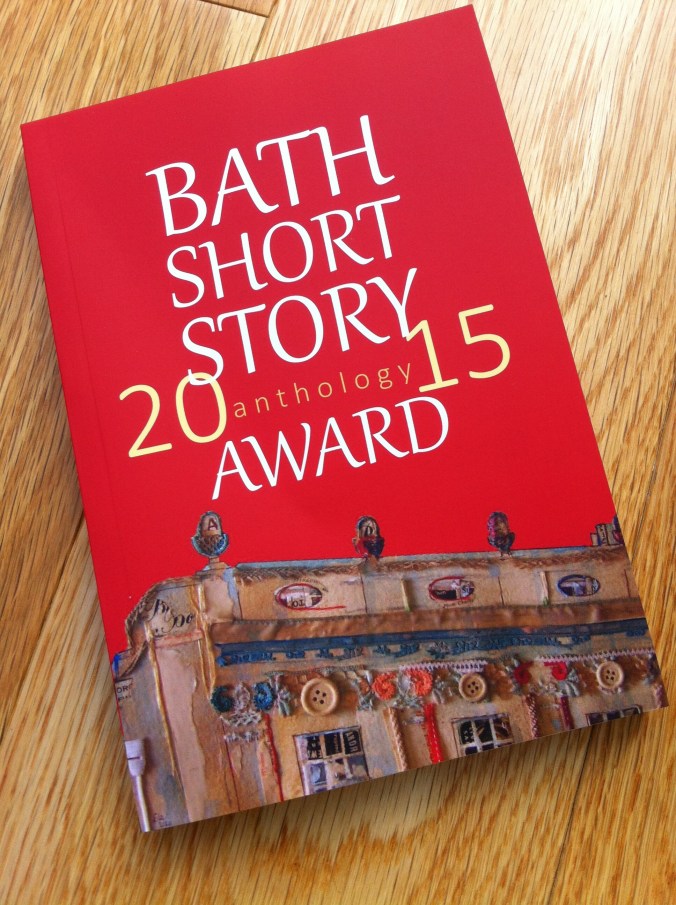
bath anthology

6. Do not burn your book.

So you’ve now got 30 rejections in the bag, but don’t start carping. ‘That’s it, I’m finished.’ Last year an agent who I met at a literary event talked about how a novelist’s first novel often becomes her second or third published novel. And since I know a couple of best-selling authors, I can vouch for that. Keep searching for ideas, maybe even start book two. Keep trying. Things can only get better, right?
Bristol Short Story Prize Awards Ceremony – The Lowdown

It was my second time at the Bristol Short Story Prize awards ceremony last night. I was hopeful; I was in with a chance after all, among 20 other writers chosen from almost 2,500 entries.

There they were, faces I recognized from last year, organiser Joe Melia, judges Sara Davies and Sanjida O’Connell, and wasn’t that 2013 winner Paul McMichael over there? He’d made the shortlist again. I made a beeline for him and we began laughing in a slightly hysterical, scared kind of way. Still the fear was nothing on last year when – gulp – I could barely speak my mouth was that dry.

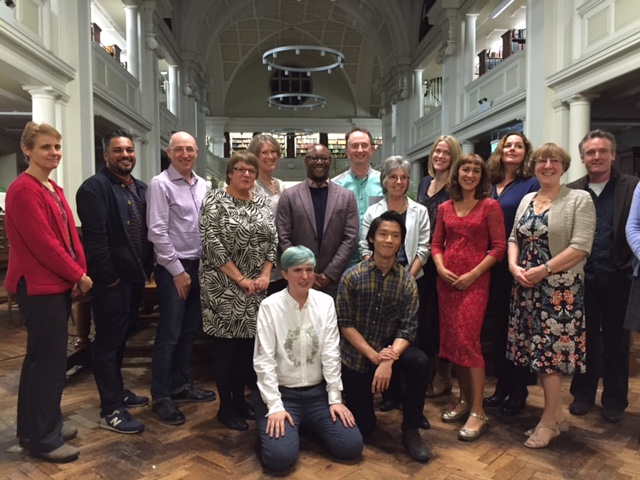
Bristol Short Story Prize Writers and Judges

Bristol Short Story Prize Writers and Judges

Us shortlistees sat in the front row in the glass-topped Reading Room at Bristol Central Library. And judge Sara Davies read out the names of the runners-up. Mine was among them.

I hadn’t won.

But so what – my story is in a book again – words that I’ve fussed over, changed and rearranged. A story that the early readers and the judges must have connected with somehow. It gets a mention in Sara Davies’ foreword.

‘We all liked….the restrained and powerful exploration of an illegal immigrant’s emotional trauma at the heart of Black Lines,’ she writes.

It was a good feeling reading that. I hope other readers connect with my story too.

BSSP photo

Anthologies galore….

Massive congratulations to Brent van Staalduinen whose story A Week on the Water won first prize, and to the other prizewinners too.

After the ceremony, I spoke to the other shortlisted writers, smiles stretched across their faces, bags bulging with anthologies. (They make very good Christmas presents, let me tell you.) Wine was drunk, woes were shared and successes were well and truly celebrated. I even signed a few books.

It was great to bend Joe Melia’s ear again. His encouragement last year helped steer me through a bout of writing self-doubt. When that strikes again, all I need to do is open up my brand new anthology and remind myself of the rewards for not being a quitter.

Joe also told me that no one in the history of the Bristol Short Story Prize has ever managed a hat trick, so maybe, just maybe I’ll throw my hat into the ring again next year.

https://www.bristolprize.co.uk/shop/

Is Your Novel Ready To Submit?

I thought I knew the answer to this question. I’d written and rewritten my first book, given the thing to friends to read, gone back to it and changed bits. And then I’d sent it off to agents, in full book deal fantasy mode.

I’ve probably submitted about 30 times in all, but each of those submissions was flawed. A central character lacked depth, another character wasn’t as funny as she should have been. You know the drill.

And so the rejection letters stacked up, sometimes with reasons: ‘it’s not enough to stand out in today’s overcrowded fiction market.’ Oh yeah? ‘I didn’t fall in love with it.’ Well, you can’t argue with that.

Then something fortuitous happened, a gem of a thing. An agent read through half of it. She loved my concept, my writing, but the characters’ voices just weren’t strong enough, she thought. I know it’s all subjective, but the thing is, I agreed. All my editing had turned the characters into papery beings, people on the wrong side of dull.

Me old novel!

Me old novel!

I started over. I didn’t write it chapter by chronological chapter. I wrote one character in her entirety in one file, another character in another file and so on – that helped me to discover each character and give them a distinct voice. I then fitted the novel back together with its brand new plot and a completely different ending.

I’ve edited it, and given it to one person to read – he loved it. Another friend has started reading and is two chapters in. As it stands, my book is the best it can be at this moment in time. The characters are strong (I think, but then I’ve thought that before), the plot line has drive, (but then I’ve thought that before too).

So is it ready to send out? One more proofread and yes, I think it is. Cue fantasy mode again.

But the beauty of starting over is this: I’m hoping that this new book has all the magic of the original draft of my first book before it got ironed flat by edits.

What it’s like to Win a Writing Competition

I started the year with a writing wish list. There were just two things on it: Win a writing competition and find a literary agent to represent my work.

The year’s gone pretty well so far; I’ve had several requests for the full manuscript of my first book, but still no offer. Yet. (I am manically rewriting.)

And then Frome happened – the Frome Short Story Competition. This year, lauded author Samantha Harvey was judging. Oh my, imagine that. I went into full-on dream mode. After much rejigging and rewriting, I entered my story about a migrant worker in Singapore called Plenty More Where You Came From.

Then I carried on redrafting my first novel. Weeks later, an email arrived saying I was in the Frome shortlist. I hadn’t even realised I was in the longlist. Fantastic – something else to say in a query letter to a literary agent.

On Sunday, I headed down the motorway to Frome. Then there it was, the library where the awards ceremony for the competition was going to take place. Other writers, other shortlisted entrants – there were 13 of us – would be there. Samantha Harvey would be there too, and the organisers Brenda Bannister and Alison Clink. There was a fair going on in the car park. A bloke in a mask was poking a rod at a metal head spouting fire, its ears belching steam. I wasn’t sure what that was all about, but my head felt furnace-hot too. God, I wanted to win.

Inside the library, the ceremony kicked off with Samantha Harvey talking about how much she’d enjoyed this year’s shortlist. Choosing first, second and third place hadn’t been easy at all, she said, the stories were that strong. She talked about how writing competitions have become increasingly important in publishing, but that really just writing is the most important thing. Don’t be distracted by not making a shortlist, by not winning, or even by winning – just write.  

Liz Gwinnell took third place with Under the Mango Tree. It was great to put a face to the name – I’d read Liz’s story, Where Hummingbirds Fly, which won third place in Frome back in 2013. That story helped to inspire me to enter Frome this year. I so loved its rich, distinct, voice. Kath Grimshaw won second place with Hotel Room.

Then Samantha described the winning story. An ugly story written with such beauty. Could it be mine? Set in Singapore. Hell, it was mine. Not knowing the names of any of the entrants – the whole thing is judged anonymously – Samantha said the title of my story.

‘It’s me!’ I squeaked and stood up.

I shook hands with Samantha and she handed me my 300 pound prize. And then I read my story out, all 15 minutes of it. And people clapped (thanks for that, people). I walked back to my seat and Samantha’s mum, who was sitting behind me, pumped her fists and said, ‘Well done.’

Frome Short Story Competition, Fiona Mitchell, writer, judge Samantha Harvey

Frome Short Story Competition. 2015 winner Fiona Mitchell and judge author Samantha Harvey

I’d done it, finally a winner.

We spent the next hour in an art gallery next door to the library where many chocolate brownies were chomped and much talk about writing was had. What happens to you when you write? When do you write? Have you written a book? And thanks Liz Gwinnell for wrapping me another brownie for the journey home. I got lost, so that brownie ended up being my tea.

So on winning: Well, it feels brilliant, it really does because someone who’s rated reckons I wrote something beautiful. And now back to the business of writing.

http://www.fromeshortstorycompetition.co.uk/plenty-more-where-you-came-from/

Sending out to Agents – Three at a time or Scattergun?

When I ‘finished’ my first novel (I use the word ‘finished’ because it sure as hell isn’t – that’s all too clear to me now), I sent the book out to three agents at a time. Standard rejection letters came back.

One competition shortlisting later, one agent liked it enough to meet me and talk through changes. She didn’t take me on, so I made further changes and scattergunned loads of other agents with it. One of them requested the whole book, but I didn’t hear from her again. Ouch!

More rejections piled up, this time with compliments thrown in. ‘It rose to the top of the pile.’ ‘You’re talented’, that kind of thing. But it was a bit like someone finishing with you. ‘I like you; it’s just I’m not in love with you.’ I emailed my friend and soon-to-be published author who’d read the first chapters of the book and loved them. (Believe me, she’s not a good liar). ‘Maybe it’s a bit crap,’ I said. ‘Because I just don’t get why no one’s taken it on.’

Then last week, my answer arrived. I emailed an agent who seemed to be looking for just my kind of book: a moral dilemma in an unusual setting. Fifteen minutes later, the agent requested the entire book then contacted me to say she was ‘really enjoying it.’ She hasn’t taken me on. However, she does want to read it again if I’m able to transform it.

Her email was a turning point because she was so honest, so detailed and so helpful. And boy, am I grateful because there’s not that many people who’ll be honest about your book. ‘That’s lovely, darling.’ (Your parents.) ‘You want me to read it again?!’ (Your husband.) ‘Oh it’s brilliant, just brilliant.’ (Your friends, who’re actually thinking, Jesus, that was hardgoing.)

So why has no one taken my little book on yet? Because it’s too blooming bleak. But it does have ‘ENORMOUS POTENTIAL.’ Yes, ‘ENORMOUS POTENTIAL!’

I’m mulling again, researching, thinking, planning, locating my funny bone. And then ding-ding, there will be a Round Four to this book. There’s just a small matter of fine-tuning my second book, oh, and earning a living. And as for firing your manuscript off to loads of agents at the same time, I wouldn’t bother. Do some careful research on what agents are looking for then send out to your chosen few, I reckon. If they give you some helpful feedback, act on it and send it out again.

* Post Script: I wrote a third book and this time, I got a publishing deal. My debut novel The Maid’s Room was published in hardback by Hodder & Stoughton on 16th November 2017.

Writing Competitions – Why Bother?

It’s there in black and white, the longlist and your name’s not on it. The disappointment sinks you. That voice starts nagging at your ear. ‘You’re fooling yourself about this writing malarkey; you must be, else you’d be up there too.’

Somehow you manage to scrape your fried-egg-ego off the floor and force yourself to start typing something new.

Unknown

Why do we do it, eh? Why do we waste 8 quid, 10 quid, sometimes 25 quid when, with more and more people entering writing competitions, we stand such a miniscule chance of being one of the chosen few.

I’ve been on both sides of the fence – what writer hasn’t? – but getting placed in this year’s Writers’ and Artists’ Short Story Competition was just the way to do it, I reckon. Enter the story then completely forget about the date that the results are revealed. I found out that my story Antelope had made the final 19 when another writer Tweeted me to tell me.

That’s so rarely the way it happens, right? I mean, how can you score through a date that’s so firmly etched into your brain?

So when the big day arrives and you discover your name’s not on the longlist, resist the urge to whack yourself over the head with a saucepan for not being quite good enough. Maybe you are, but if your work doesn’t strike a chord with the early readers in competitions, you’re out. Maybe you almost got through – who knows? – or maybe you just don’t have the same writing tastes as the judges.

Case in point – last year I was lucky enough to be in the Bristol Short Story Prize shortlist. Here’s a confession – I entered the same story, albeit a much shorter version, into the Yeovil Prize, and it wasn’t even placed. Even though, I like that story so much better than the one which Yeovil commended me for back in 2013.

BRISTOL PRIZE PIC

It’s all about your audience. So this year, right back at you, Yeovil; I’m hitting you with something new.

In fact, I’ve got that many short stories up my sleeve now, I’ve got one for every UK competition that’s going. Only I’m not going to enter everything – there’s only so much disappointment a girl can take.

So why bother entering anything at all – because being placed occasionally really does help to silence your own self-doubt, for a while at least. And it’s a small voice of encouragement that you might just be doing something right.

When NOT to start Writing

Be patient. That’s what my soon-to-be-eighty dad told me last week.

I’d been chatting with my parents about writing, sharing my agitated ideas for my third novel with them.

‘Be patient,’ said my dad in his soft Irish lilt.

This from a bloke who has never kicked the cardboard on an Ikea flat-pack. This from a bloke who has hung doors without swearing. He goes on long walks on winter-thick days, my dad, and he’s the most patient person I know. Unknown

I’m pretending I’ve inherited the skill. I’ve forced myself to stop pacing; I’ve shut down my computer each night at nine. I’m still working on book three though, walking forwards with it: Listening, watching, waiting.

There are lots of ideas swilling around in my foggy head, it’s just I’m unsure they’re the right ones. There’s a story about a woman and a teenage girl. There’s a corrosive, white landscape. There’s a feisty little voice whispering at my ear.

Book three is gathering, percolating, but it’s a bit blurry still. I wrote 50,000 words of a book once which ended up in the trash can because I’d started without thinking it through properly. So for now, l’m doing like my dad and being patient. Because the best work comes from patience, don’t you think?

What NOT to do when a literary agent reads your book

Three years ago, I finished my first book. I entered it into a competition and although it didn’t win, it was among the final three on the shortlist. A literary agent liked it enough to meet me and ran through the things I should change. One thing I needed to do was big up one of my main characters.

I patted and shaped, tore the book to pieces and put it back together again. And in the middle of all this, I ended up on the shortlist of another major competition. Yes, I clenched my fists and jumped up and down. This is it: signing with an agent, here I come. Except, it didn’t quite go like that.

The agent enjoyed the first half of The Maid’s Room, but didn’t fall in love with it. Oh I admit it, I snivelled.

images

But not for long. The next day, I started my second novel and spent three months bashing away at the keyboard until it was finished. (It’s now in the polishing stages.)

Something unexpected happened then. I started to think about my first book. I tried not to, I really did, but there it was – with its underground car parks, its jackfruit and its rambutans. There it was, with its swimming pools and shopping malls. I could see suddenly how everything in the story connected. I hadn’t seen it back then when I’d been so close to landing an agent. When she’d asked me to rewrite a third of the book and give that character new life, what I’d done was create someone flat and unbelievable, someone dull, not the feisty, clever, tactless woman she is now, not the woman with three dimensions instead of just two. Worse than that though, I’d written the whole damn soul out of the book.

Well, now, I’ve put the soul back in. I’m proud of it, really proud, in a way that I wasn’t before. Best make a start on sending it out then……

* Thirteen months after writing this post, literary agent Rowan Lawton signed me. My debut novel The Maid’s Room will be published by Hodder & Stoughton on 16th November 2017.


Eat.WriteOneWord.MakeTea.Repeat.

Writer’s block. Here’s how it goes:

1) I’ve got five hours free and I’m sat in front of the computer with the compulsion to write a short story. There are colourful characters brewing, but no plot, no twist, no spark.

Make cup of tea number two.

2) Google writer’s block and find these quotes:

‘Writer’s block, I just drove around it four times. All my favorite writers live there.’ Jarod Kintz

‘I don’t get writer’s block. I get writer has too many ideas and doesn’t know which one to start next, block.’ Tyler Hojberg.

Yep, Tyler, now you come to mention it, I have got ideas for short stories – one fully formed with a twist and everything – and other vague ideas.

Make cup of tea number three. Clean bathroom sink.

3) Read two stories on the Costa Short Story Award website, both of them stunning, but The Glassblower’s Daughter felt so deft and complete that I’m now feeling the pressure just a little bit more.

Watch five minutes of a documentary I’ve already seen in the hope it might send ideas fireworking my way. It doesn’t. Drum fingers.

4) Oh what the hell, I try and cover two jobs at once by writing a short story using the unformed character of my unwritten third novel. I write 1,800 words and some of them are really quite good. But it’s not the blooming Glassblower’s Daughter, is it?

Make cup of tea number four. Take all the utensils out of a kitchen drawer and vacuum the accumulated crumbs. Wipe down. And breath……

5) Google writer’s block AGAIN and find this:

‘I don’t think that writer’s block exists really. I think that when you’re trying to do something prematurely, it just won’t come. Certain subjects just need time. You’ve got to wait before you write about them.’ Joyce Carol Oates.

Right, that’s it then, Joyce, I’m off for another cup of tea and some more cleaning.

images-2

What it’s like to attend an Awards Ceremony for Writers

Full Crew BSSP

Bristol Prize writers, judges, speakers and co-ordinator Joe Melia

I had no idea what I’d let myself in for when I accepted my invitation to the Bristol Prize Awards Ceremony. What would the atmosphere be like? Would we have to stand on a stage with shining spotlights turned off one by one until the winner was announced?

Inside the vast space of Bristol’s Spike Island gallery last night, the air was fat with nerves – or maybe that was just me. I picked up a glass of wine from the table and hand aquiver, I just about baptized myself with Sauvignon Blanc.

Sip. Slurp. Gulp.

Bristol Prize co-ordinator Joe Melia talked us writers through what was about to happen.

‘This is all about celebrating your writing,’ he said. Some of the tension fell away.

Here was a bunch of writers at different stages in their careers – a published novelist, a creative writing tutor and others who, like me, are just at the beginning.

So much to talk about. Do you ask friends to read your work? Have you got an agent? And, and, and….

And then it was time for the show.

Images of the stunning designs submitted for the anthology cover flashed onto the wall. The Mayor of Bristol stood up to speak, followed by novelist Patricia Ferguson.

And then came the moment of judgement. Would my name be in the winning three? Hands white-tight on the side of the chair, breath held, the names of the runners up were read out. Three, four, five. I heard my name. I hadn’t won. Was I upset? Disappointed? No way – at last I could breathe again, high on my prize – my first ever piece of published fiction – The Colour of Mud.

Big congratulations to winner Mahsuda Snaith and to all the other writers in the anthology. Didn’t we have some party?!

The evening was a highlight of my year – inspiring chats with authors, an agent, and all the lovely people at the Bristol Prize.